EU Reporter flags Veliaj detention as warning sign for Albania’s justice reform
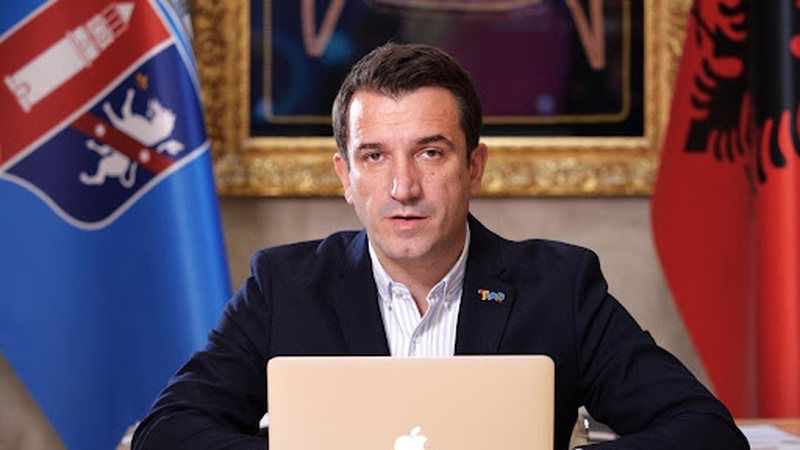
The Irish-based media outlet focused on European political affairs, EU Reporter, has published a detailed analysis criticizing the prolonged pre-trial detention of Tirana’s suspended mayor, Erion Veliaj, and warning of deeper systemic issues within Albania’s justice reform.
Why is this important: The article argues that Veliaj’s ten month detention without trial exemplifies what can go wrong when anti-corruption efforts are pursued without safeguards for due process. As Albania continues its bid to join the European Union, the case is drawing increased attention from European legal experts, foreign lawmakers, and human rights observers who warn of potential political motivation and democratic backsliding. This stands in marked contrast to the unquestioning support shown by EU representatives toward the new justice institutions, despite growing evidence that while achieving notable results, these institutions are also showing a troubling tendency toward arbitrary practices and behaviors that would not be acceptable in EU member states.
Context: In the piece titled “Erion Veliaj: Ten months behind bars and the slow unravelling of Albania’s justice system”, the publication calls the case against Veliaj a “checklist of everything that can go wrong” when justice institutions overreach. It cites excessive detention, unexplained bail rejections, delayed charges, and unequal treatment of co-defendants as red flags.
Veliaj has been in custody since February 2025 under investigation by Albania’s Special Anti-Corruption Court (SPAK) for alleged involvement in irregular municipal contracts. He was not formally charged until July. Of the 18 individuals investigated, 17 have been released under lighter measures – only Veliaj remains in prison.
Citing legal reviews by two international law firms – Kasowitz Benson Torres (New York) and Mishcon de Reya (London) – the article says the process falls “well short of European legal standards” and shows “clear signs of political motivation.”
The criticism has extended beyond legal experts. The Venice Commission has publicly warned that extended detention of elected officials without trial undermines democratic legitimacy. Istanbul mayor Ekrem İmamoğlu and political strategist Alastair Campbell have both voiced concern. And in Washington, U.S. Congressman Keith Self recently called for a reevaluation of Albania’s justice reform, noting that case backlogs have increased tenfold since the reform began.
“Even America’s patience has limits,” the article notes, describing this as a potential turning point for international support.
SPAK under scrutiny: The article acknowledges the Special Prosecution’s important mission – combating organized crime and political corruption – but warns of a “heavy-handed” approach when its success is measured mainly by high-profile arrests. Similar concerns are raised in cases involving former President Ilir Meta and ethnic Greek mayor Fredi Beleri.
A broader warning: EU Reporter concludes that the Veliaj case is not just about one man, but about the health of Albania’s democracy. “When a popularly elected mayor is removed from office for nearly a year without trial,” it writes, “the damage goes beyond prison walls – it strikes at the core of public trust.”
The article describes Albania as being at a crossroads. While judicial reform was once seen as a model in the region, the Veliaj case – and others like it – have revealed just how fragile those gains remain.
Go deeper
Erion Veliaj’s lawyers urge Constitutional Court to fast-track review amid concerns over capital’s governance

Published on December 13, 2025
Why is this important: The request places renewed pressure on the Constitutional Court to address one of the most contentious cases to emerge from Albania’s justice reform. Veliaj has been held in pre-trial detention since February, while the capital city is effectively governed in his absence by a deputy mayor. His lawyers argue that continued delays undermine constitutional guarantees, democratic representation, and the effective administration of Tirana, making the court’s timing as consequential as its eventual ruling.
Albanian Constitutional Court reinstates Deputy PM, redraws the line between judiciary and government

Published on December 12, 2025
Why is this important: While not a final ruling on the substance of the corruption case against Balluku, the decision represents a landmark institutional moment—one that redefines the limits of judicial reach into the executive branch. The case will now proceed to a full public hearing on January 22, where the Court will consider Prime Minister Edi Rama’s appeal for a constitutional interpretation of the powers of prosecutors and judges to suspend sitting cabinet members.
Albania proposes new rules to screen foreign investments in sensitive sectors

Published on December 9, 2025
Why is this important: The draft regulation introduces detailed procedures to assess and, if necessary, block or condition foreign investments that could pose risks to public order, national security, or Albania’s informational sovereignty. It signals growing concern about hybrid threats – including cyberattacks, disinformation, and data leaks—that could exploit vulnerabilities in strategic sectors.