Albanian parties, CEC, and EU stress urgency of political finance law and electoral reform
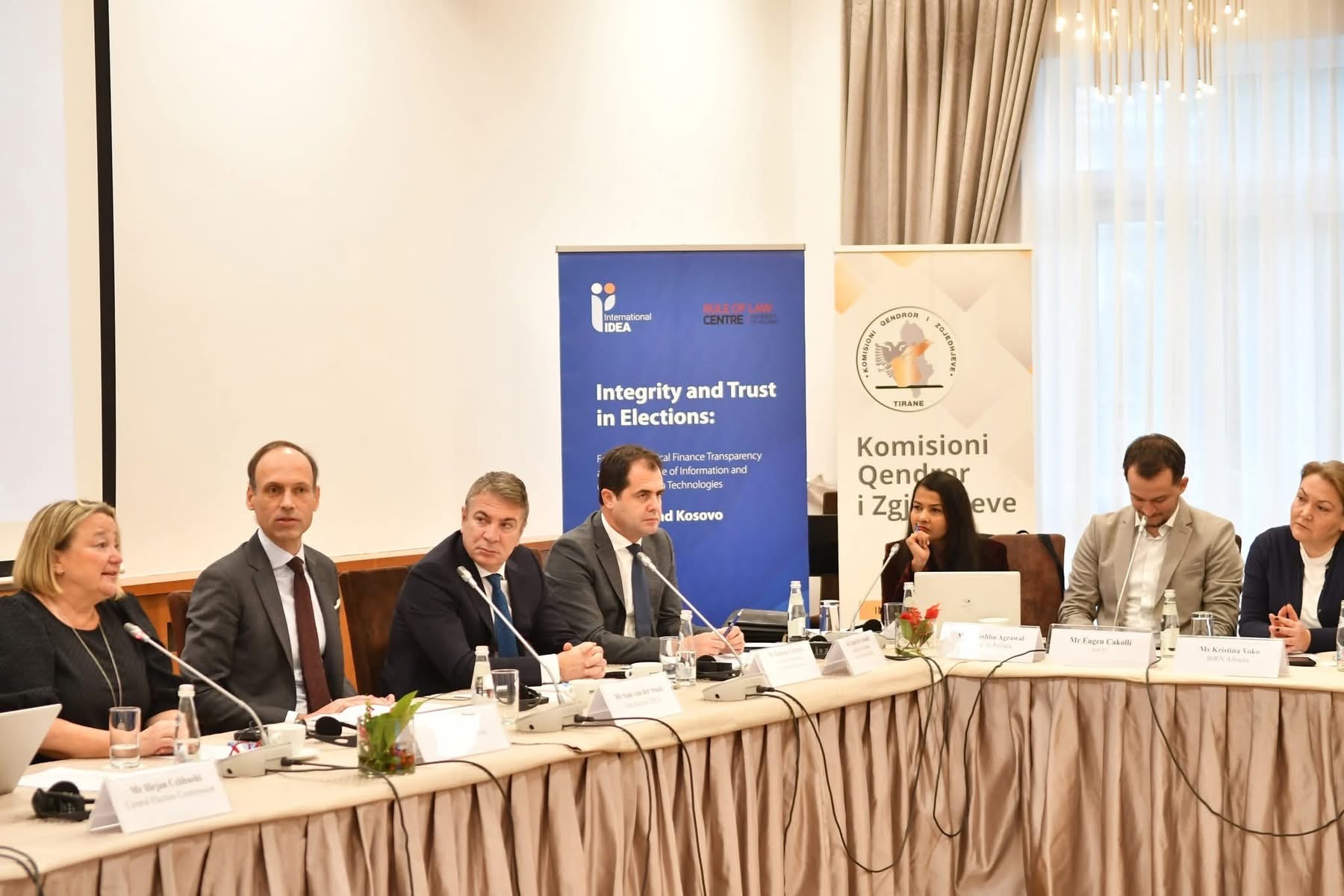
Political parties, election authorities, and international representatives came together at a conference organized by the University of Helsinki to discuss urgent reforms to rebuild public trust in elections. Central to the discussions were the approval of a new law on political party financing and a comprehensive, consensus-based electoral reform.
Why is this important: Albania’s progress toward EU accession depends in part on key reforms that demonstrate transparency, accountability, and adherence to democratic standards. The lack of financial transparency in party funding and ongoing election irregularities have raised concerns domestically and internationally.
Context: Socialist co-chair of the Electoral Reform Committee, Damian Gjiknuri, outlined concrete measures for the upcoming political finance bill, which parties have agreed to pass by December 30.
“All donations should be made through banks, and companies with public contracts must be barred from financing political parties,” Gjiknuri said.
Democratic Party co-chair Oerd Bylykbashi highlighted election issues he believes have undermined fair competition:
“The use of the public administration is essentially the use of the state budget in the campaign,” he said, referring to reported abuses in past elections.
CEC findings raise red flags: State Election Commissioner Ilirjan Celibashi presented troubling data on political party transparency. In 2024, 84 out of 135 registered parties failed to submit their mandatory financial reports.
Irregularities included:
- Discrepancies between declared and actual expenses,
- False income declarations,
- Missing tax-compliant invoices,
- Mismatches with fiscal systems,
- Parties declaring zero income while remaining politically active.
EU pressure for reform: EU Ambassador Silvio Gonzato issued a clear message: political finance transparency and electoral reform are preconditions for Albania’s EU integration.
“We are at a critical point. Albania must take essential steps in the rule of law and democracy. Without this, we cannot close any further EU negotiating chapters,” Gonzato warned.
Next steps: All amendments to the electoral code must be finalized by July 2026, following consensus from the bipartisan reform commission. The upcoming months will be pivotal in determining whether Albania can meet its obligations under the EU accession framework.
Go deeper
Erion Veliaj’s lawyers urge Constitutional Court to fast-track review amid concerns over capital’s governance

Published on December 13, 2025
Why is this important: The request places renewed pressure on the Constitutional Court to address one of the most contentious cases to emerge from Albania’s justice reform. Veliaj has been held in pre-trial detention since February, while the capital city is effectively governed in his absence by a deputy mayor. His lawyers argue that continued delays undermine constitutional guarantees, democratic representation, and the effective administration of Tirana, making the court’s timing as consequential as its eventual ruling.
Albanian Constitutional Court reinstates Deputy PM, redraws the line between judiciary and government

Published on December 12, 2025
Why is this important: While not a final ruling on the substance of the corruption case against Balluku, the decision represents a landmark institutional moment—one that redefines the limits of judicial reach into the executive branch. The case will now proceed to a full public hearing on January 22, where the Court will consider Prime Minister Edi Rama’s appeal for a constitutional interpretation of the powers of prosecutors and judges to suspend sitting cabinet members.
Albania proposes new rules to screen foreign investments in sensitive sectors

Published on December 9, 2025
Why is this important: The draft regulation introduces detailed procedures to assess and, if necessary, block or condition foreign investments that could pose risks to public order, national security, or Albania’s informational sovereignty. It signals growing concern about hybrid threats – including cyberattacks, disinformation, and data leaks—that could exploit vulnerabilities in strategic sectors.