Constitutional Court to weigh Rama’s challenge to Deputy PM suspension amid separation of powers debate
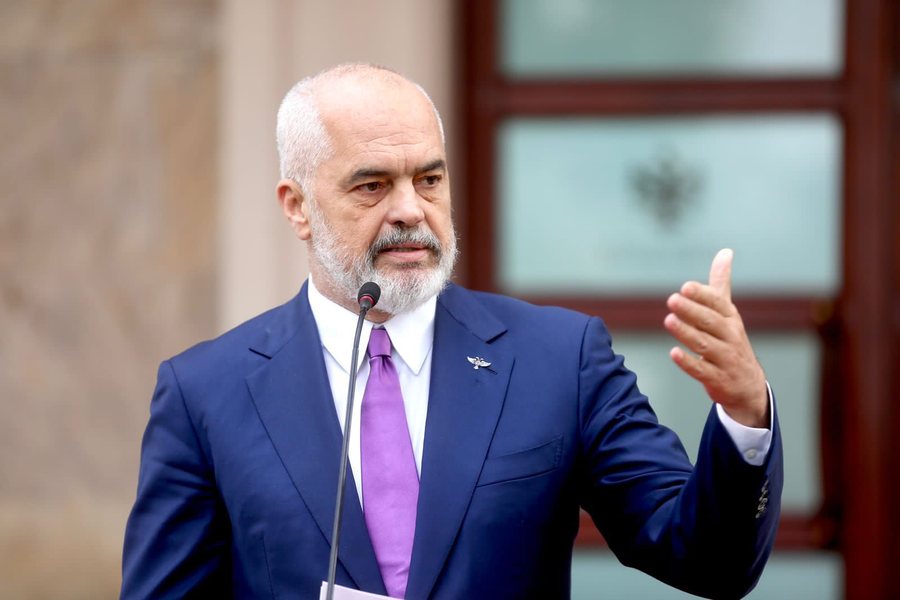
On Thursday, Albania’s Constitutional Court will decide whether to fully review Prime Minister Edi Rama’s appeal challenging the Special Anti-Corruption Court’s decision to suspend Deputy Prime Minister Belinda Balluku. A three-judge panel failed to reach unanimity earlier on Tuesday, pushing the matter to the full bench of eight constitutional judges.
Why is this important: The decision could set a precedent over whether courts can suspend sitting cabinet members without violating the separation of powers. Rama argues that the Special Court’s action infringes on executive authority and threatens the constitutional roles of the Prime Minister, President, and Parliament.
What’s happening: The judicial panel—composed of Constitutional Court President Marsida Xhaferllari, Sander Beci, and Sonila Bejtja—was expected to determine whether Rama’s case merits full review. Due to lack of consensus, the issue now heads to the full panel, where a majority vote is sufficient.
In Thursday’s session, the court may also issue an interim ruling on whether to freeze the Special Court’s suspension, allowing Balluku to return to office until a final decision is made.
What Rama is asking:
The Prime Minister’s complaint includes two requests:
- A constitutional interpretation of whether the Special Anti-Corruption Court overstepped its powers by suspending a government minister—a role constitutionally reserved for the Prime Minister and confirmed by the President and Parliament.
- The annulment of the suspension itself, which Rama argues violates ministerial immunity and upsets the institutional balance.
Deputy PM Balluku has also appealed the suspension separately at the Special Court of Appeals, mirroring the Prime Minister’s argument that judicial interference undermines constitutional governance.
What did Rama say: In his most recent remarks, Rama defended his challenge as a necessary “institutional and judicial battle” to prevent what he called “a dangerous precedent.”
“If this suspension is legitimized, we risk opening the door to political manipulation of the executive via the judiciary,” he said. “This would be an unheard-of precedent in any democratic country.”
He compared the decision to a “child’s stumble”—an early misstep in a new justice system that could damage the core of democratic governance.
Background: Balluku, also Minister of Infrastructure and Energy, was suspended by the Special Court pending an investigation into public procurement violations tied to the Llogara Tunnel and Tirana Outer Ring Road projects. The court also barred her from leaving the country.
Rama’s position is backed by references to the Venice Commission, which has warned that judicial suspension of ministers interferes with executive authority and risks politicizing justice. The European Court of Human Rights has never endorsed such a suspension, Rama claimed.
Next steps: The Constitutional Court’s Thursday session will determine whether to proceed with a full case review—and possibly whether Balluku can return to her post temporarily while the case unfolds.
Go deeper
Erion Veliaj’s lawyers urge Constitutional Court to fast-track review amid concerns over capital’s governance

Published on December 13, 2025
Why is this important: The request places renewed pressure on the Constitutional Court to address one of the most contentious cases to emerge from Albania’s justice reform. Veliaj has been held in pre-trial detention since February, while the capital city is effectively governed in his absence by a deputy mayor. His lawyers argue that continued delays undermine constitutional guarantees, democratic representation, and the effective administration of Tirana, making the court’s timing as consequential as its eventual ruling.
Albanian Constitutional Court reinstates Deputy PM, redraws the line between judiciary and government

Published on December 12, 2025
Why is this important: While not a final ruling on the substance of the corruption case against Balluku, the decision represents a landmark institutional moment—one that redefines the limits of judicial reach into the executive branch. The case will now proceed to a full public hearing on January 22, where the Court will consider Prime Minister Edi Rama’s appeal for a constitutional interpretation of the powers of prosecutors and judges to suspend sitting cabinet members.
Albania proposes new rules to screen foreign investments in sensitive sectors

Published on December 9, 2025
Why is this important: The draft regulation introduces detailed procedures to assess and, if necessary, block or condition foreign investments that could pose risks to public order, national security, or Albania’s informational sovereignty. It signals growing concern about hybrid threats – including cyberattacks, disinformation, and data leaks—that could exploit vulnerabilities in strategic sectors.